Solving Side-to-Side Variation in Baking Processes
Solving the mysteries inside commercial-scale baking systems can be challenging and seem more like an art than a science. This article demonstrates the SCORPION's capabilities with Case Studies drawn from actual analyses performed by Reading Thermal.
-
The SCORPION® Data Logger with Termpature Sensor Array.
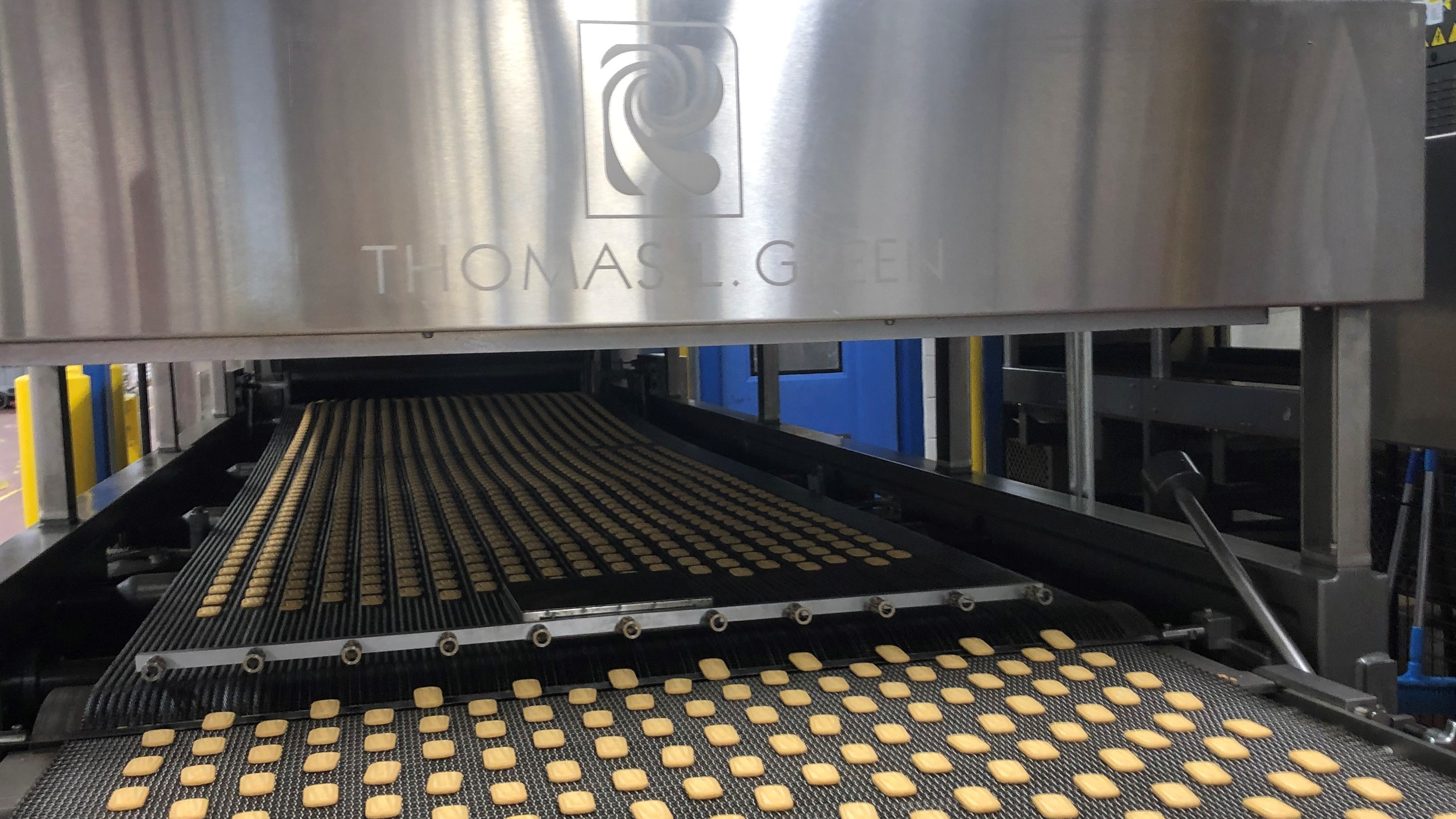
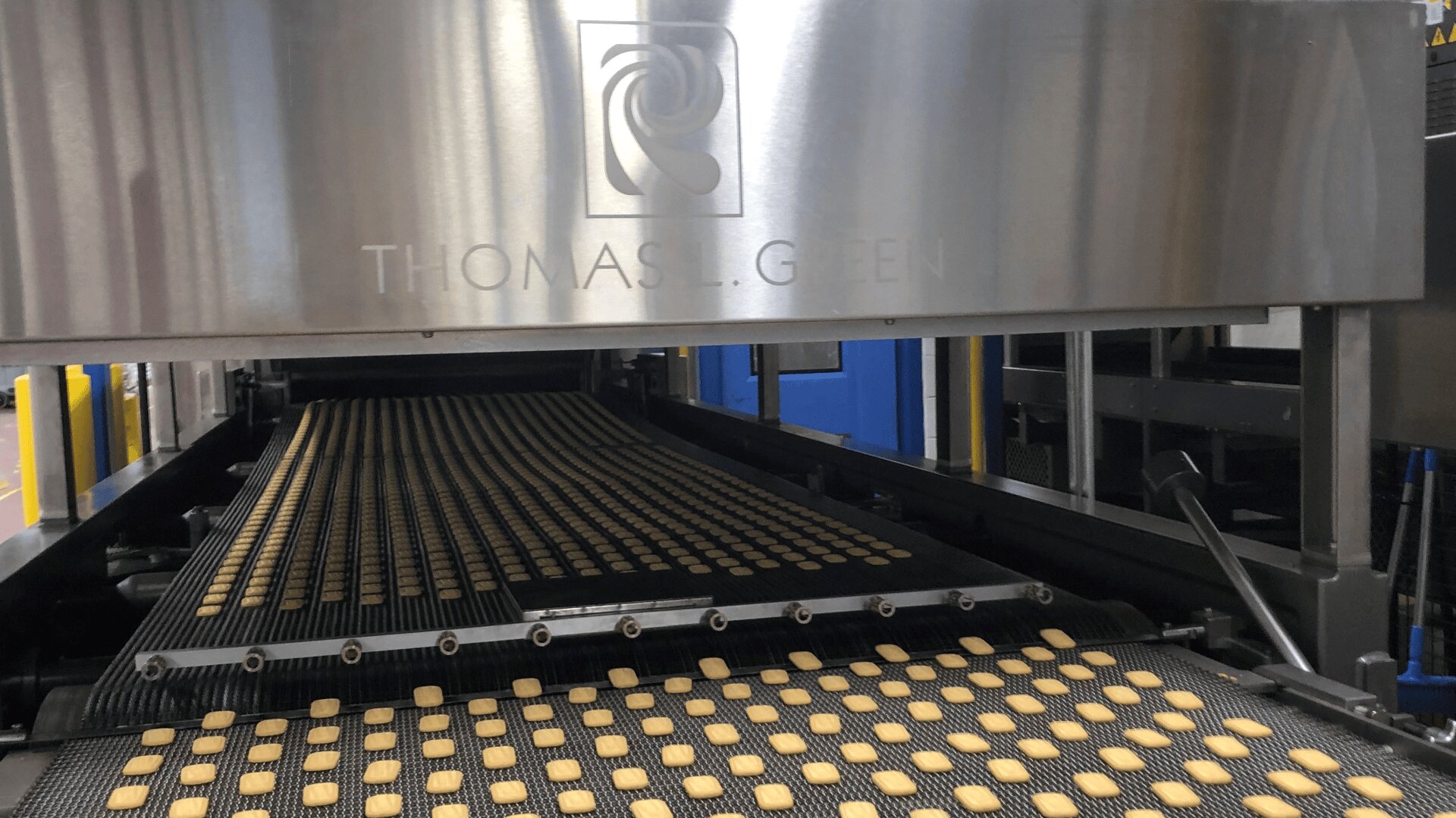
Solving the mysteries inside commercial-scale baking systems can be challenging and seem more like an art than a science. Once product enters the oven, dryer or cooler the impact of the heat, humidity, and air velocity are only visible when the product comes out the other end.
The Reading Thermal SCORPION® 2 Profiling System was designed to take the guesswork out of this baking process. Product level temperature, humidity, heat flux and air velocity data is gathered and stored in real time using the SCORPION® 2 sensors placed directly on
the conveyor belt. The data can be extracted and analyzed from the 32-channel Data Logger using software designed to easily display and distill the environment hidden inside the baking chamber.
To perform a process evaluation, a smart sensor is attached to the SCORPION® Data Logger. The combined unit is placed inside a protective Thermal Barrier on the conveyor. Scan rates as short as 0.1 second and Smart Sensor Arrays built to match process widths
guarantee a complete picture of what is happening inside the baking chamber.
Real-time data from the SCORPION® Data Logger with Temperature Sensor Array can help you with a variety of applications including:
- Product Consistency Line-to-Line
- Quality Assurance
- Optimizing Food Safety Product Throughput
- Analyzing Equipment Performance
This paper provides information about SCORPION® Temperature and Air Velocity Sensor Arrays and demonstrates their capabilities with Case Studies drawn from actual analyses performed by Reading Thermal.
SCORPION® 2 SENSOR ARRAY TYPES
TEMPERATURE
The SCORPION® 2 Temperature Sensor Array is designed to yield a precise picture of temperature from side-to-side and end-to-end. Simultaneous product core temperature measurements can be made via the 2 or 4 product probe inputs on the sensor array.
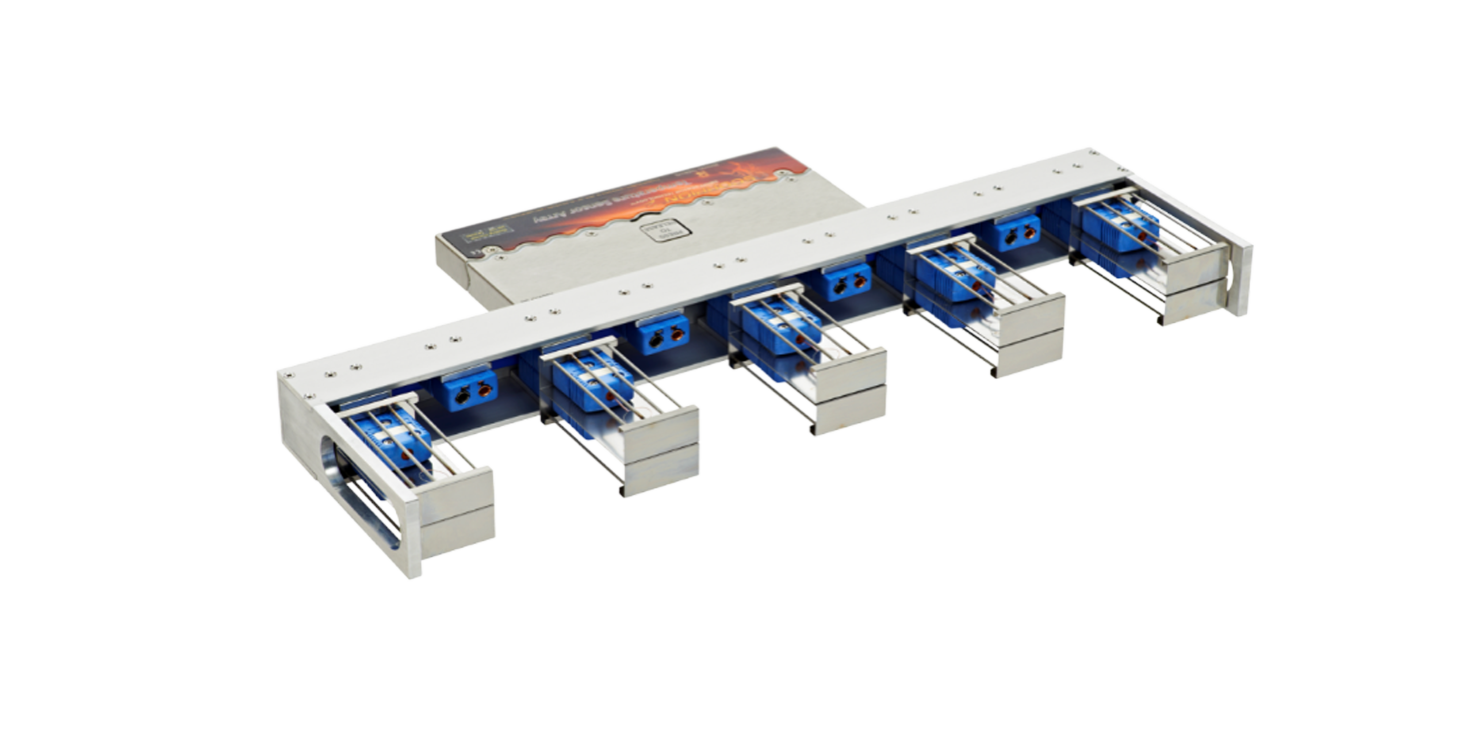
Temperature Smart Sensor Array
Type A Sensor: upper air & lower band temperatures
Type B Sensor: upper air & lower air temperature
- Either sensor type can use up to 15 pluggable sensor pairs with 2 – 4 product probe inputs
- Sensor pairs are in fixed positions, at product level for excellent repeatability
- Array is built to match process conveyor width
- Temp Range: -58°F (-50°C) to 662°F (350°C)
- Resolution: 0.045°F (0.025°C)
- Accuracy: ±1.8°F (±1.0°C)
MAIN APPLICATION:
- Study side-to-side temperature variation
- Over time characteristic profile
AIR VELOCITY
The SCORPION® 2 Air Velocity Sensor Array delivers a precise picture of airflow patterns inside an oven, dryer, or cooling tunnel, from side-to-side and end-to-end. Sensors are evenly spaced across the length of a bar and collect data as the array passes through the process and displays the results in meters per second or feet per minute.
- Up to 15 air velocity sensors
- Built to match process conveyor width
- Sensor Type: Miniature hot wire anemometers
- Measures airflow from all directions
- Airflow Range: 0-1969 fpm (0-10 mps)
- Resolution: ~2% of reading
- Accuracy: ±5% of full scale
- Battery Running Time: 2+ hours
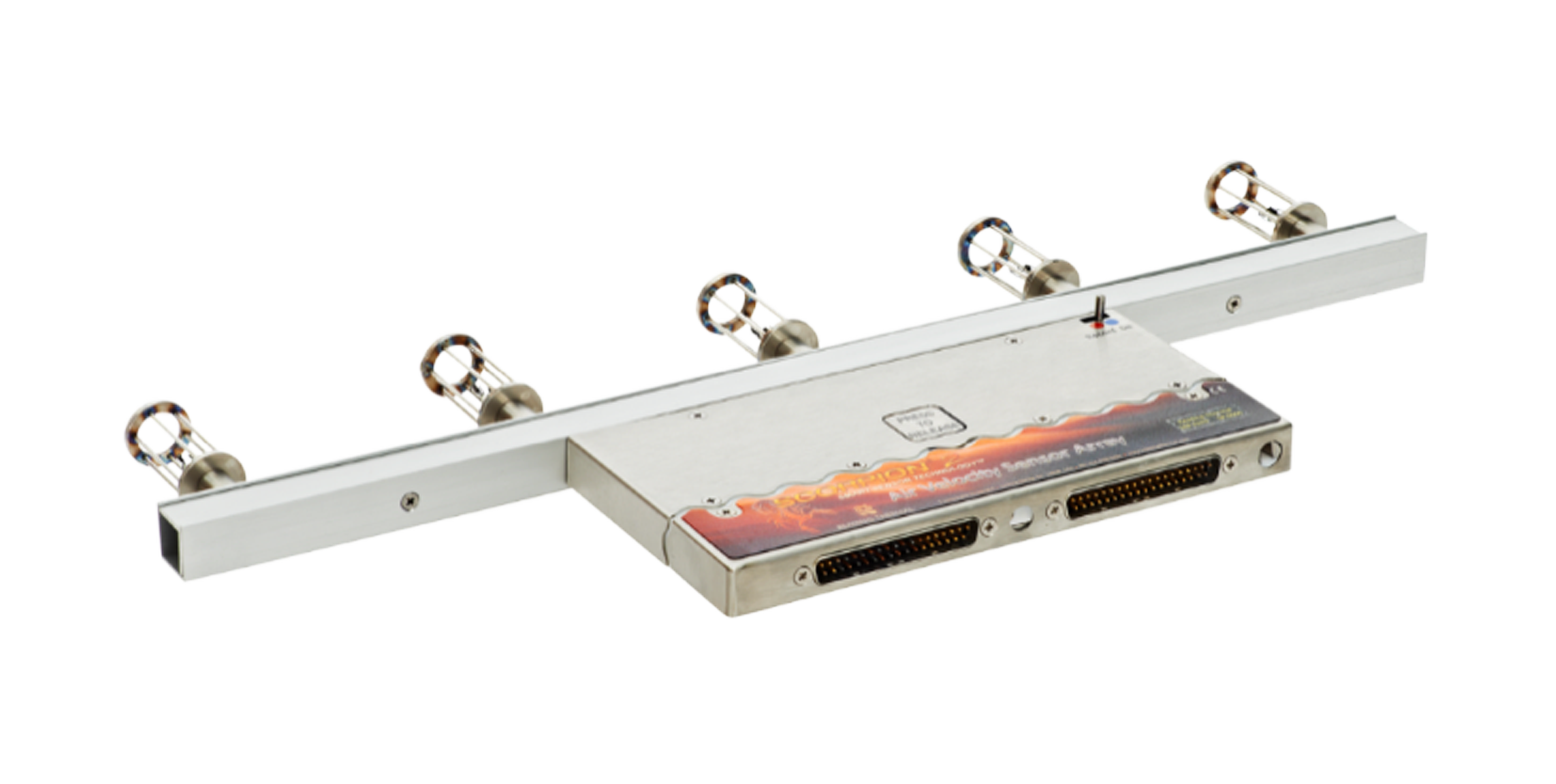
Air Velocity Smart Sensor Array
MAIN APPLICATION:
- Study side-to-side airflow variation
- Over time characteristic profile
CASE STUDY: Inconsistent Baking Causes Low Yield
Temperature Smart Sensor Array - Upper Air - 2D Line Chart
Product: Chicken Breast Fillets
Plant: Chicken Processor - Southern U.S.
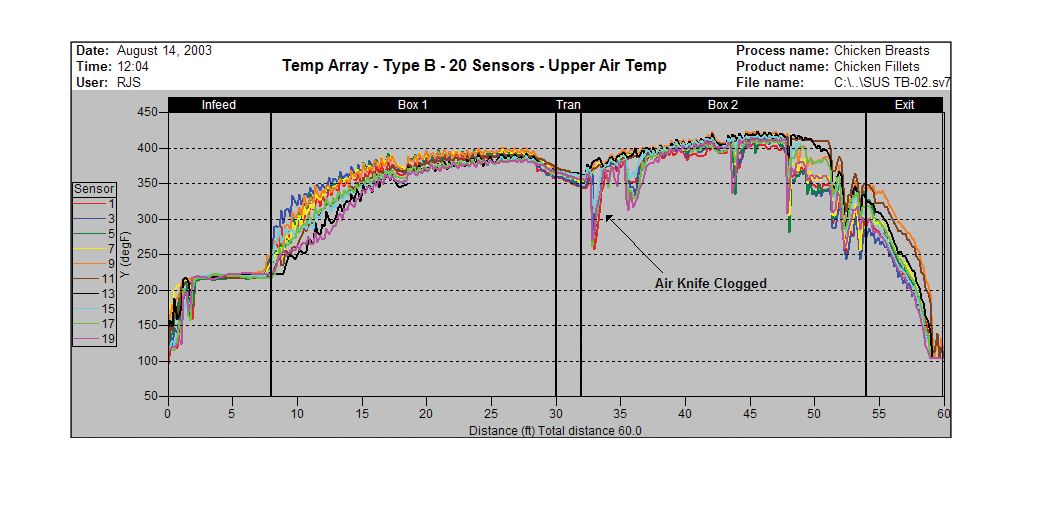
Problem: The company is having trouble producing chicken fillets with a consistent bake, causing low yields. A side-to-side and over-time variation in baking occurs sporadically during production runs.
What is the cause of the variation?
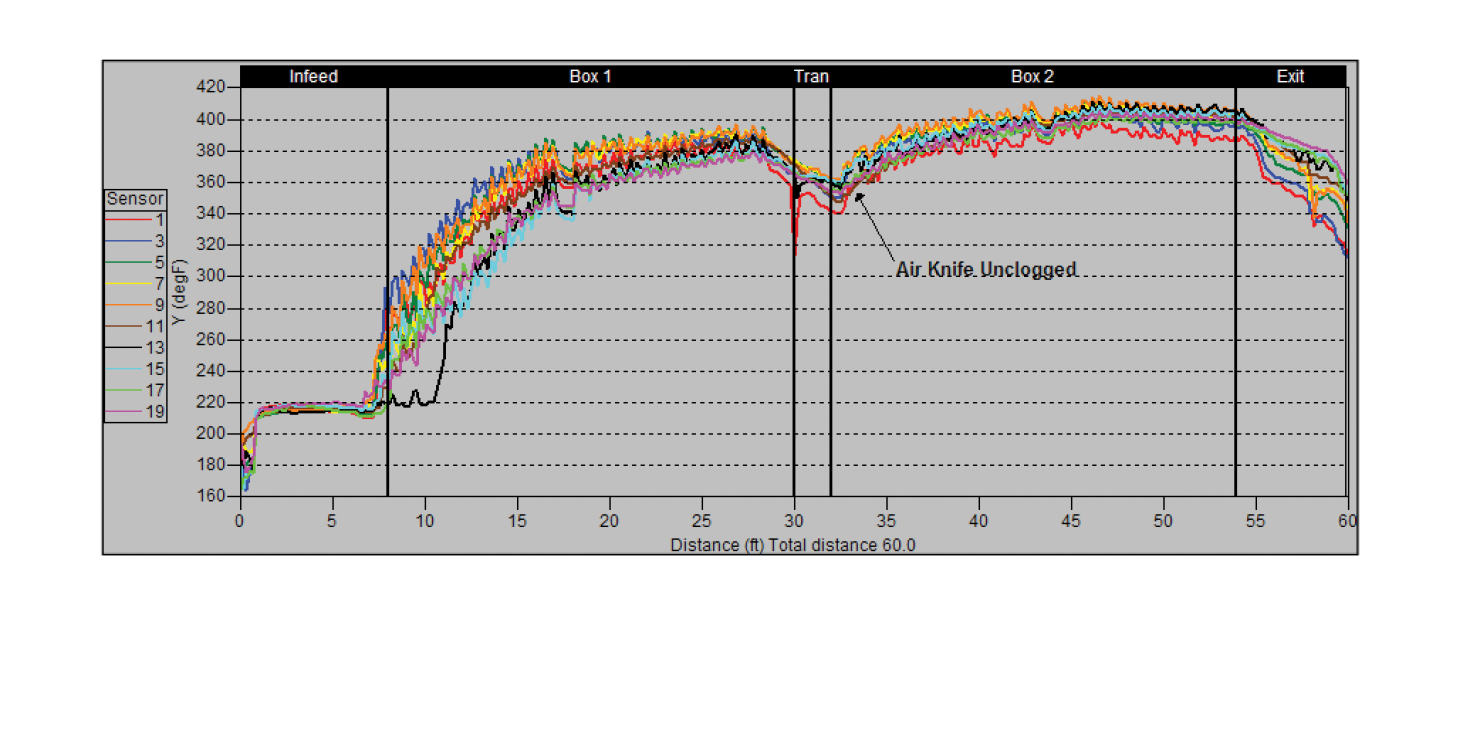
Analysis: Temperature profiling reveals large temperature drops (>100°F) across the band at 32 feet into the process, just inside the entrance of Zone #2. Normally there is some temperature dip near openings to ambient condition, but this was much more extreme than usually observed.
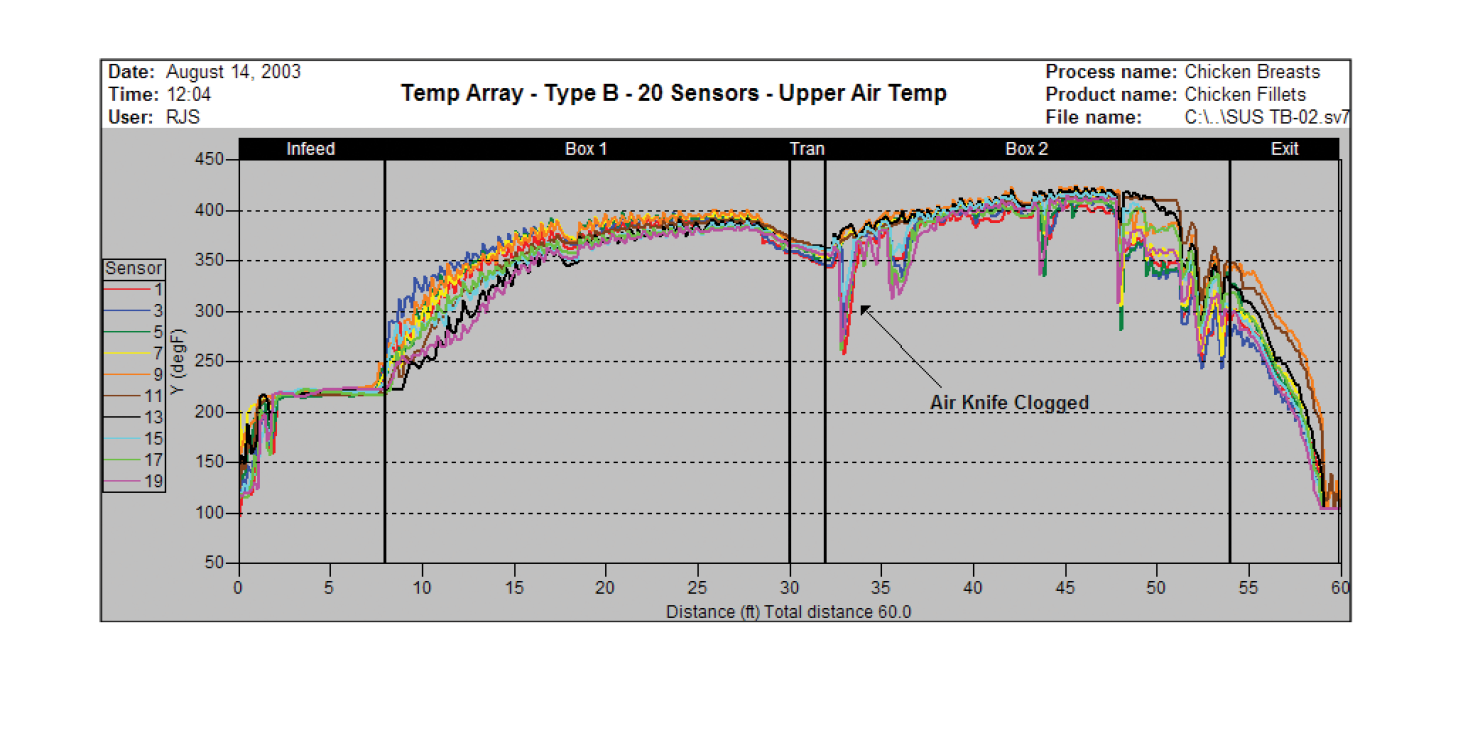 Solution: Physical inspection revealed that an air knife was clogged with product debris. The clog occurs after 2-3 hours of production. The air knife was cleaned and unclogged, resulting in a new maintenance plan for that process and the product quality returned
to acceptable levels.
 CASE STUDY: Product Disorientation Causes Oven Fires
Product: Breadsticks for a Snack Mix
Plant: Bakery in Mid-West U.S.
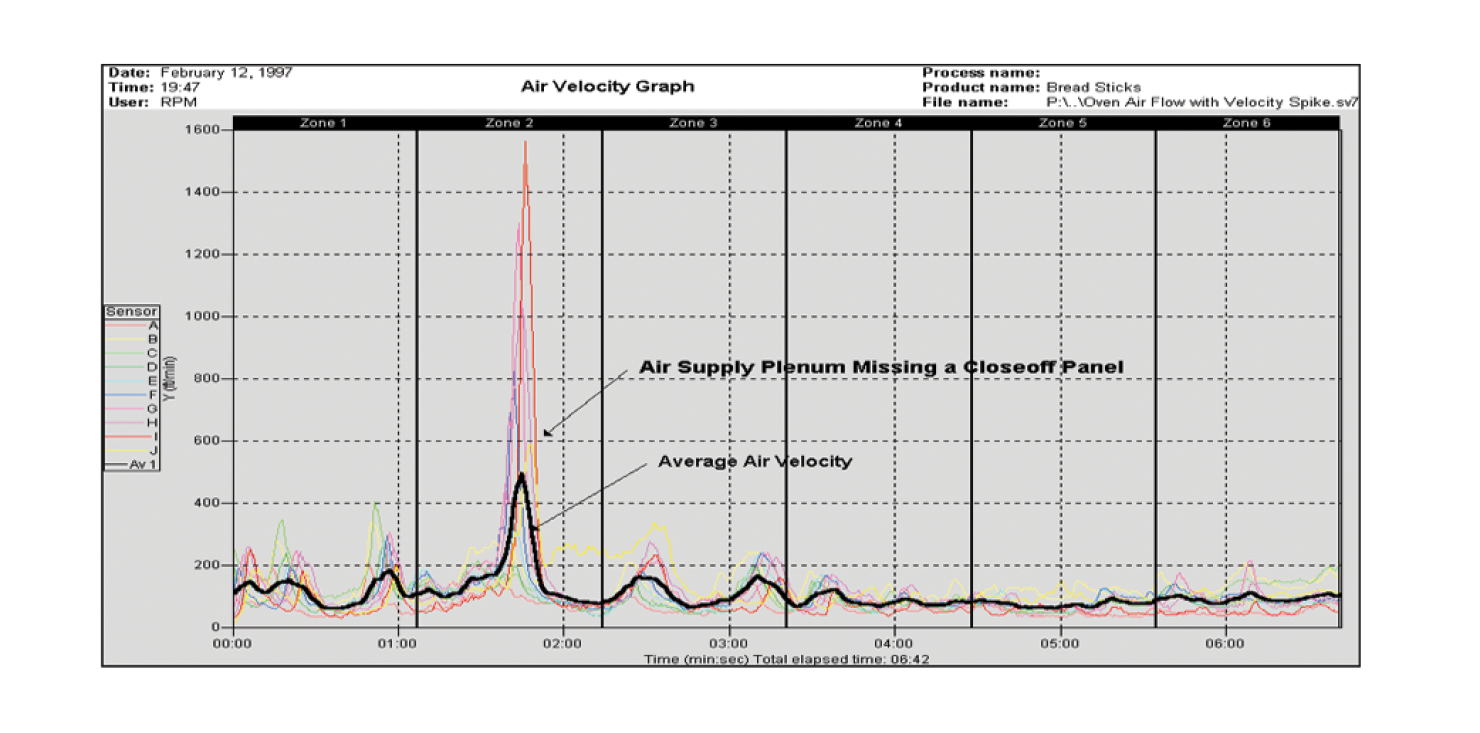
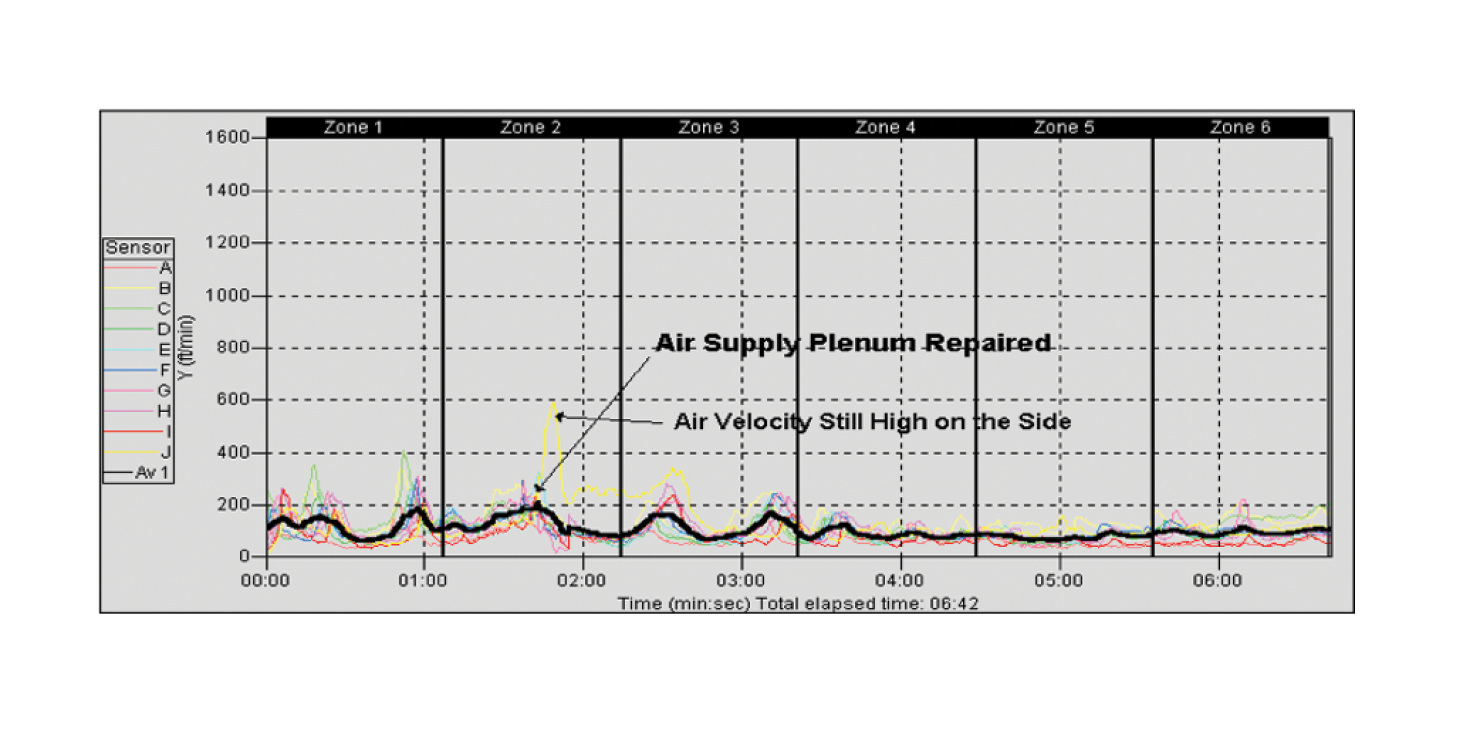
Problem: Product enters the oven oriented and evenly spaced on the belt. Somewhere in the oven, the product lifts off the belt,
gets disoriented, and some fall off the belt. Product builds up in the second zone and causes oven fires.
What causes the product to lift off the belt?
Analysis: Air velocity profiling reveals that there is a large spike in velocity that indicates a missing plenum close-off panel. These close-offs
are intended for maintenance access or airflow control. The missing close-off causes a huge rush of heated air in that area, disturbing
the product.
 Solution: The oven plenum was repaired, and a test was run to determine if the air currents caused the disorientation of the product. New testing showed the repair was mostly effective but that the farthest side of the belt still experienced high air velocities. This air wasn’t enough to cause the product to fall off the belt and start a fire. Additional testing needs to be done, but the oven fire issue is resolved.
 SCORPION® SENSOR ARRAY CHART
Temperature Smart Sensor Array - Upper Air - 2D Line Chart PRODUCT............................................................................................................................................Saltine Crackers
PROCESS TIME............................................................................................................................................................2:23
OVEN ZONES................................................................................................................................6 Zones, 50 ft each
OVEN LENGTH.........................................................................................................................................................300 ft
OVEN TYPE...........................................................................................Direct Gas Fired (DGF) Ribbon Burner
MEAN VARIATION.............................73% within ±15°F, with a 75°F spread near the 1-minute mark
PROFILE DESCRIPTION
This is NOT a good profile due to significant temperature deviation in the oven. A cracker product will see significant differences in development, texture, or coloring with this large of a temperature spread across the oven band.
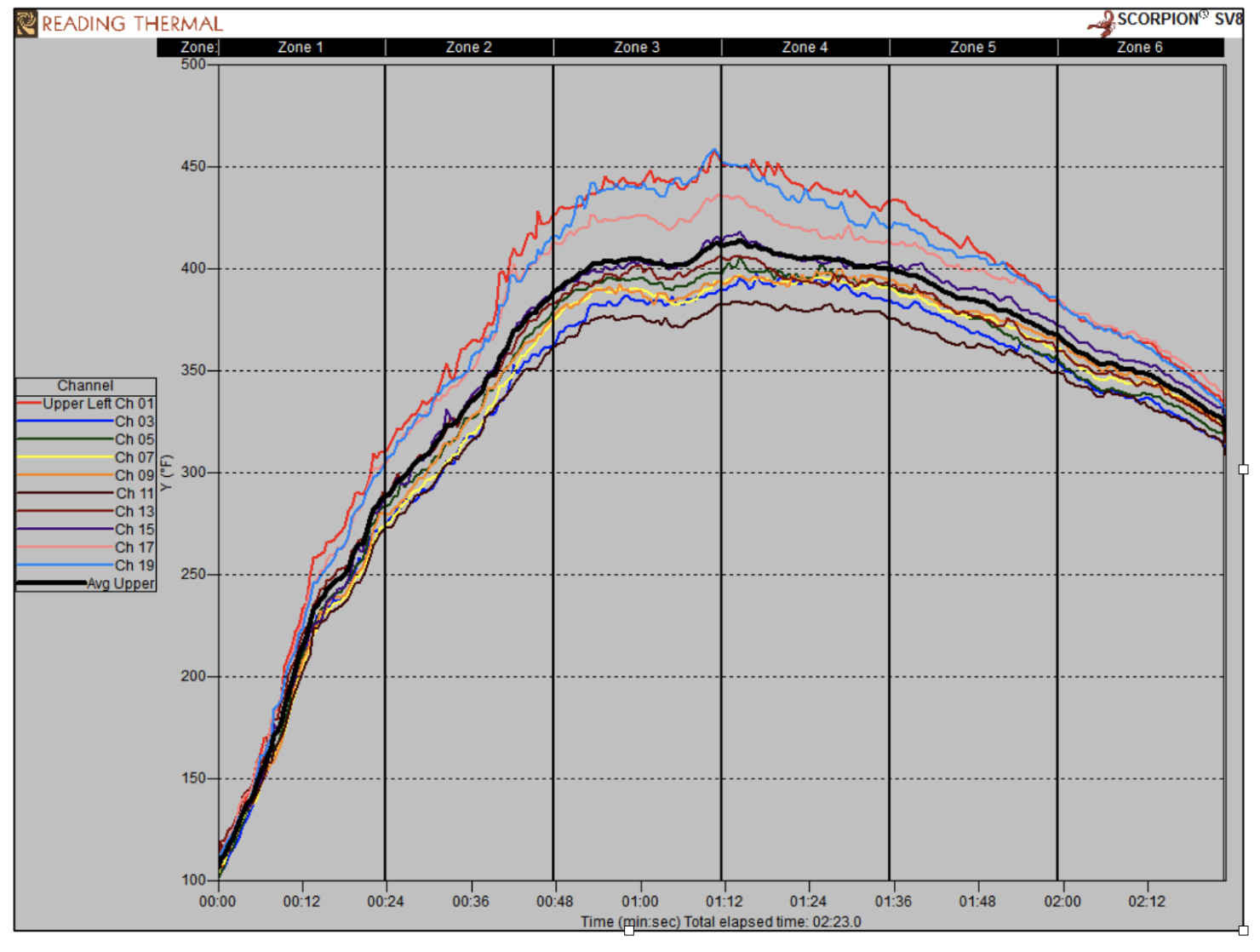 KEY: Graph lines: Temperature sensor readings, each color band is a different sensor (channel) along the array.
Temperature Smart Sensor Array - Upper Air - 2D Contour Chart
PRODUCT...........................................................................................................................................Saltine Crackers
PROCESS TIME...........................................................................................................................................................2:23
OVEN ZONES...............................................................................................................................6 Zones, 50 ft each
OVEN LENGTH.........................................................................................................................................................300 ft
OVEN TYPE............................................................................................Direct Gas Fired (DGF) Ribbon Burner
MEAN VARIATION............................73% within ±15°F, with a 75°F spread near the 1-minute mark.
PROFILE DESCRIPTION
This is NOT a good profile due to significant temperature deviation in the oven. Large non-green areas indicate the temperature of the process is poorly controlled. The location and consistency of the hot and cold areas suggest an aggressive exhaust outflow or poor burner evenness near the center of the oven. The DGF tri-zone burners may need adjustment or maintenance, or the burner screens cleaned, if equipped.
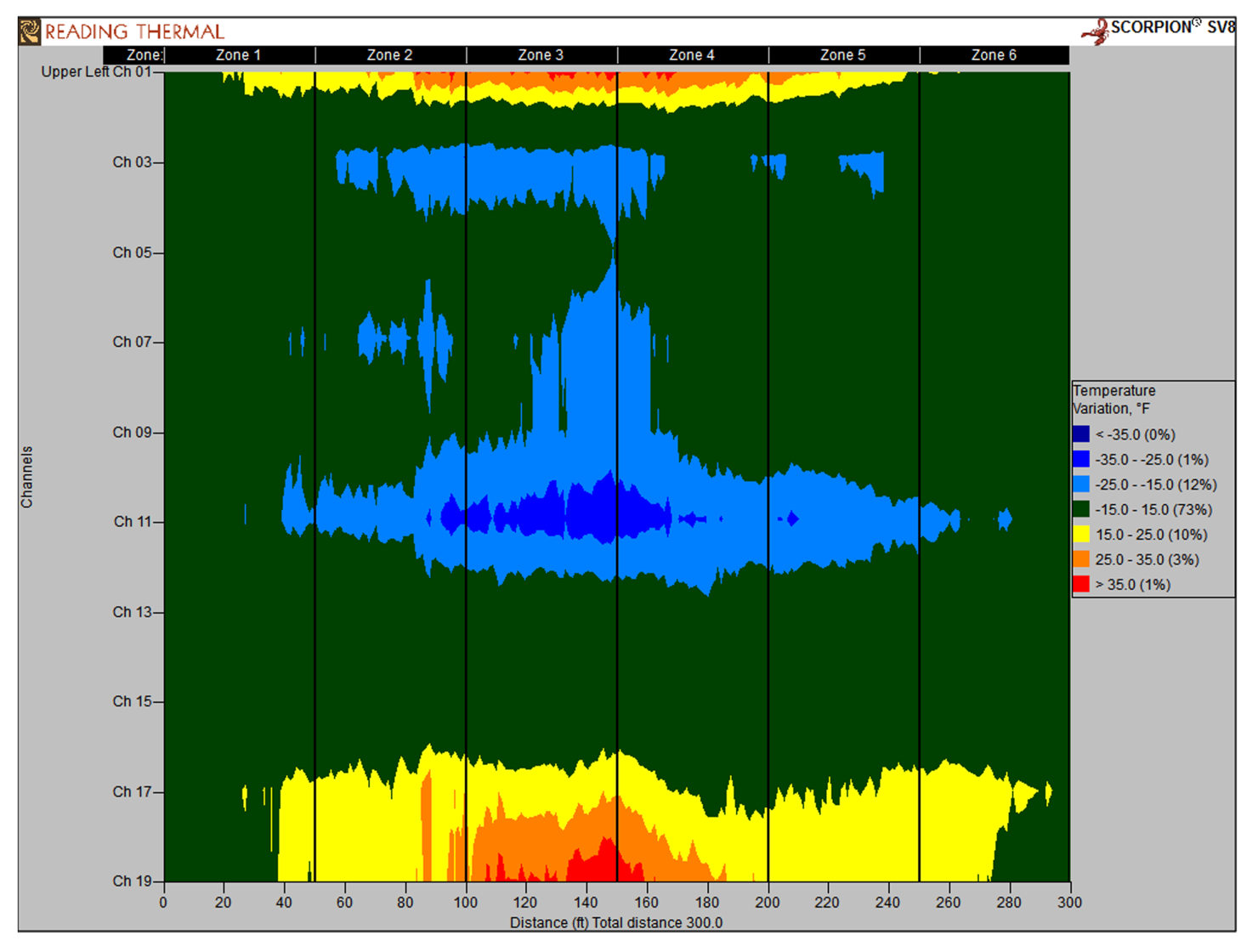 KEY: Contour color zones represent regions of average temperature variations, with green being the center average. Red zones are hotter and blue zones are colder. This plot is variation, not the absolute temperatures.
Temperature Smart Sensor Array - Upper Air - 3D Mesh Chart
PRODUCT............................................................................................................................................Saltine Crackers
PROCESS TIME............................................................................................................................................................2:23
OVEN ZONES...............................................................................................................................6 Zones, 50 ft each
OVEN LENGTH........................................................................................................................................................300 ft
OVEN TYPE............................................................................................Direct Gas Fired (DGF) Ribbon Burner
MEAN VARIATION.............................73% within ±15°F, with a 75°F spread near the 1-minute mark
PROFILE DESCRIPTION
This is NOT a good profile due to significant temperature deviation in the oven. Large non-green areas and severe 3D spikes indicate the temperature of the process is poorly controlled. The location and consistency of the hot and cold areas suggest an aggressive exhaust outflow or poor burner evenness near the center of the oven. The DGF tri-zone burners may need adjustment or maintenance, or the burner screens cleaned, if equipped.
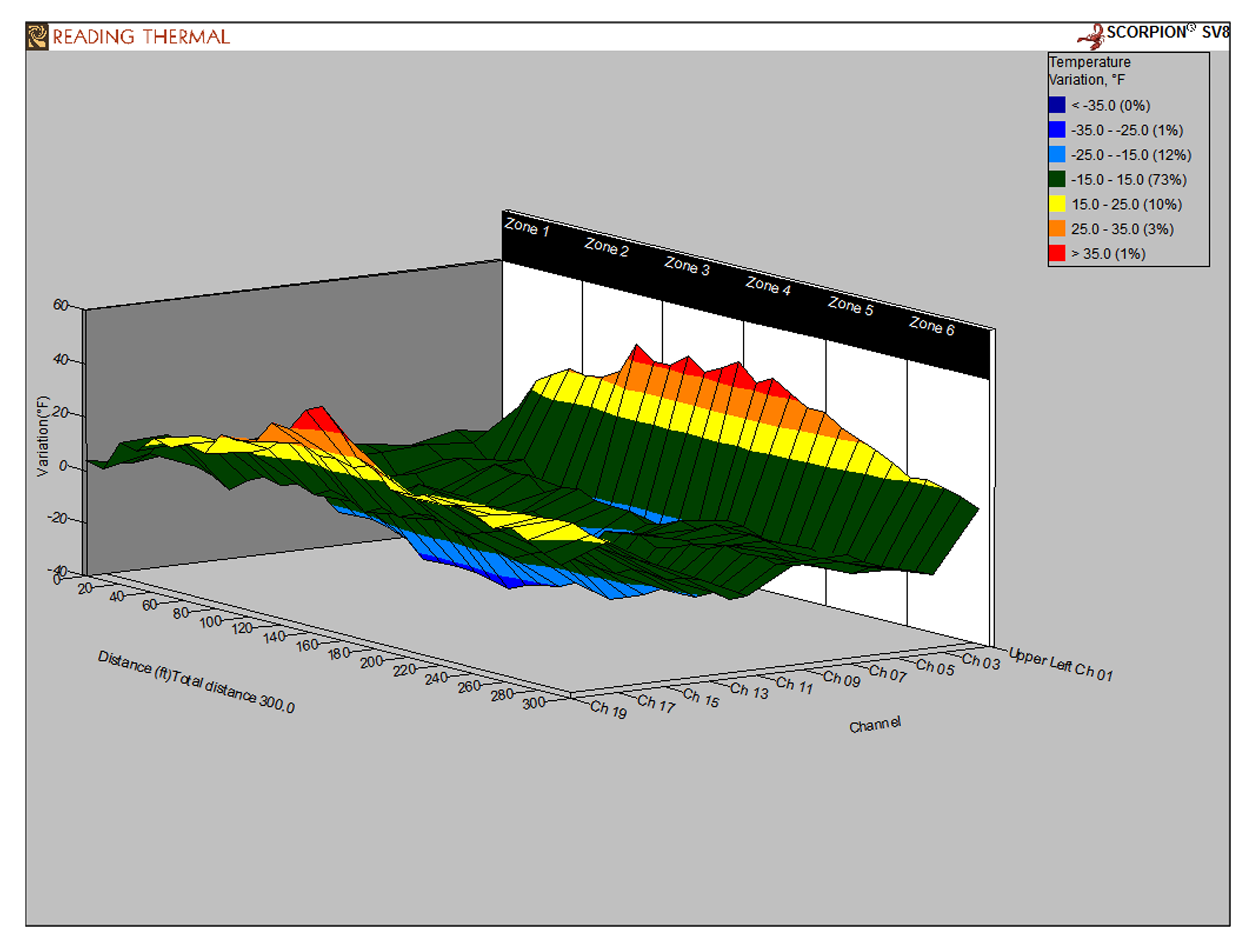
KEY: 3D Mesh color zones represent regions of average temperature variations, with green being the center average. Red zones are hotter and blue zones are colder. This plot is variation, not the absolute temperatures.
Temperature Smart Sensor Array - Upper Air - 2D Contour Chart
PRODUCT..............................................................................................................................................................Cookies
PROCESS TIME..........................................................................................................................................................5:00
OVEN ZONES...............................................................................................................................4 Zones, 50 ft each
OVEN LENGTH.........................................................................................................................................................200 ft
OVEN TYPE.............................................................................................................................Forced Air Convection
MEAN VARIATION.............................................................91% within ±7°F, with 0% observed past ±15°F
PROFILE DESCRIPTION
This is an EXCELLENT profile due to very minimal temperature deviation in the oven. Many frequent small-amplitude spikes at regular intervals indicate the locations of the convection plenum nozzles with regular and predictable accuracy. No variation past ±15°F observed.
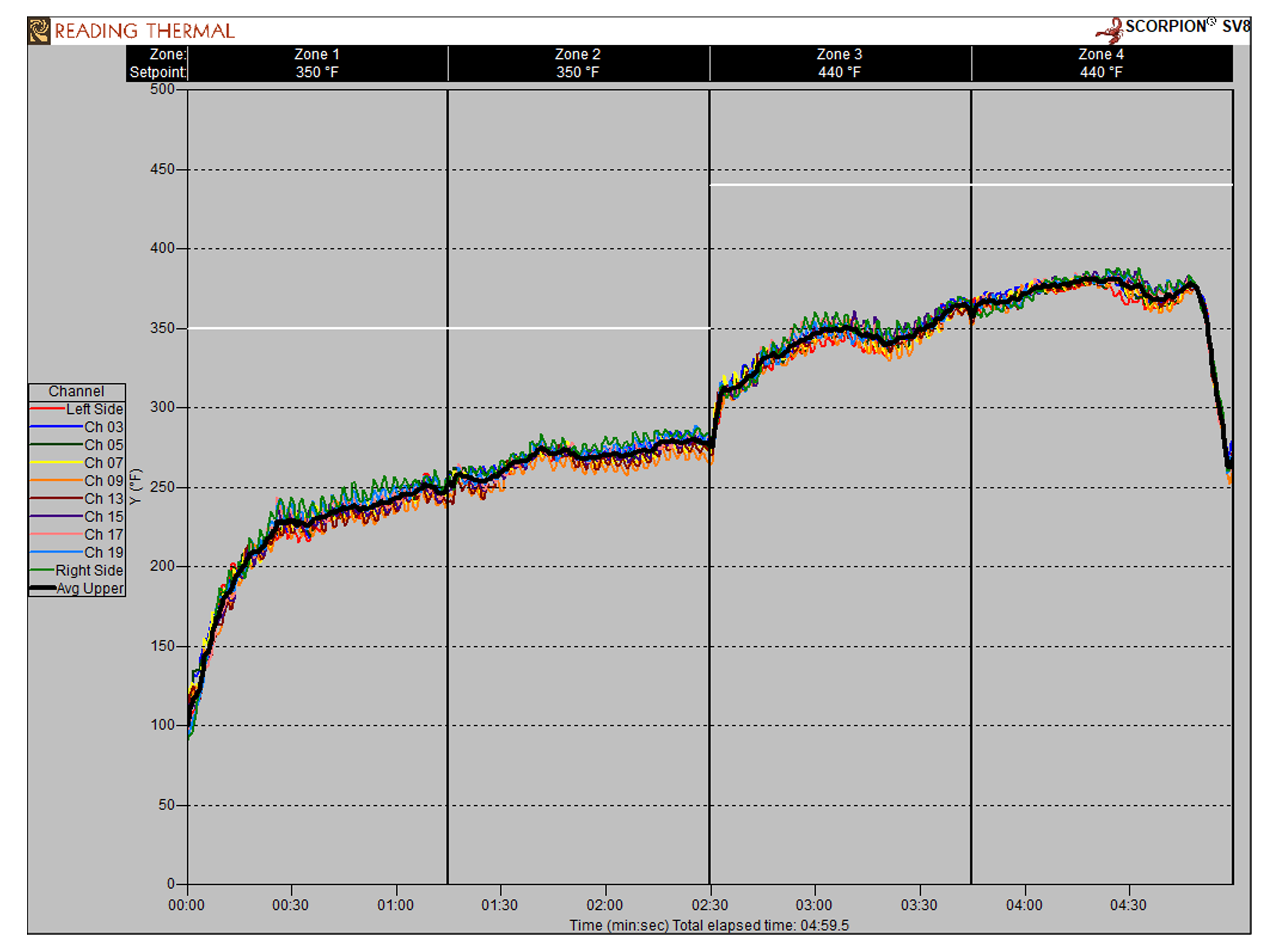
KEY: Graph lines: Temperature sensor readings, each color band is a different sensor (channel) along the array.
Temperature Smart Sensor Array - Upper Air - 2D Line Chart
PRODUCT..............................................................................................................................................................Cookies
PROCESS TIME...........................................................................................................................................................5:00
OVEN ZONES................................................................................................................................4 Zones, 50 ft each
OVEN LENGTH........................................................................................................................................................200 ft
OVEN TYPE............................................................................................................................Forced Air Convection
MEAN VARIATION.............................................................91% within ±7°F, with 0% observed past ±15°F
PROFILE DESCRIPTION
This is an EXCELLENT profile due to very minimal temperature deviation in the oven. Small color stripes of little variation indicate the locations of the convection plenum nozzles with regular and predictable accuracy. No variation past ±15°F observed.
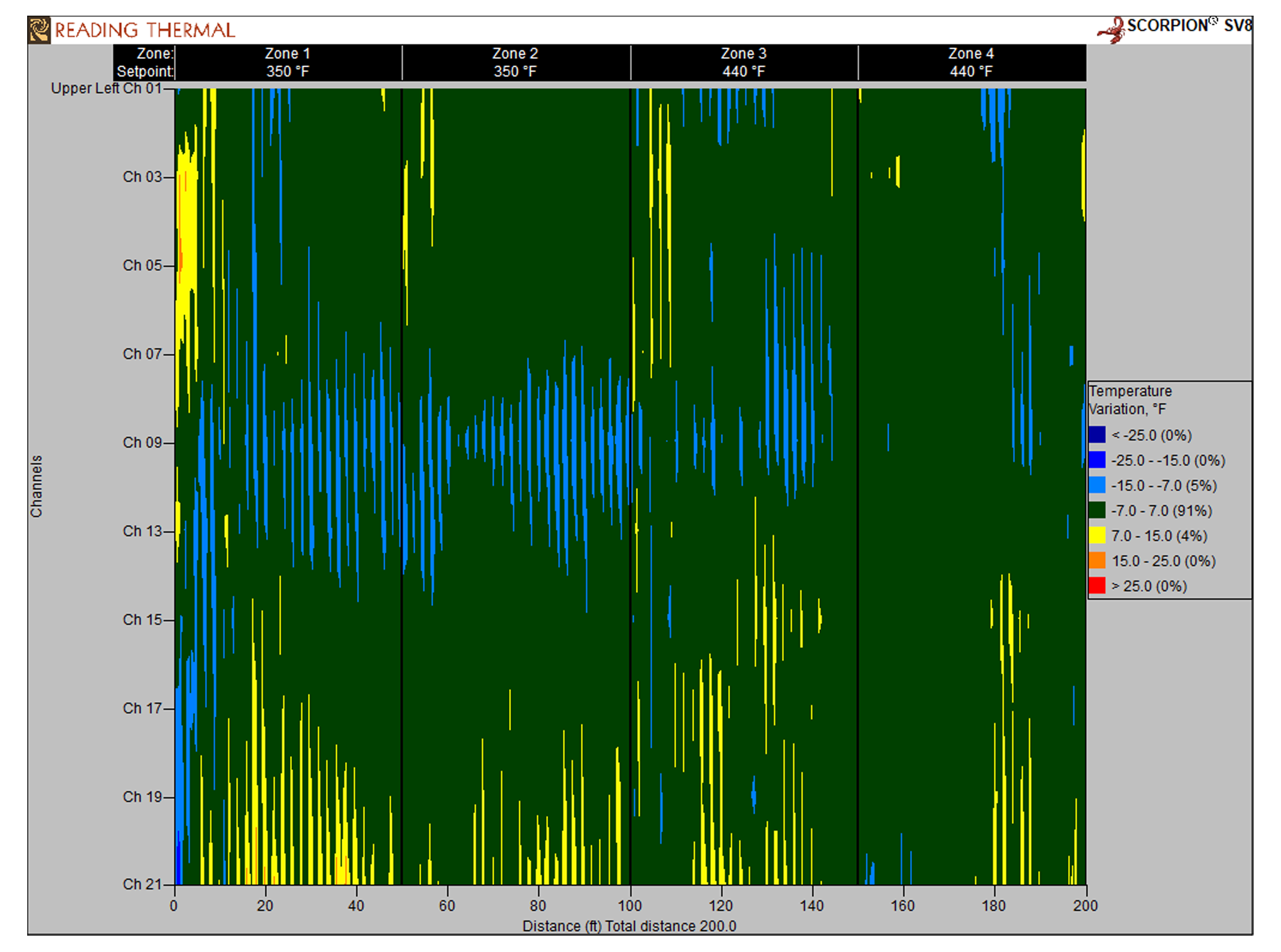
KEY: Contour color zones represent regions of average temperature variations, with green being the center average. Yellow zones are hotter and blue zones are colder. This plot is variation, not the absolute temperatures.
Temperature Smart Sensor Array - Upper Air - 2D Line Chart
PRODUCT.........................................................................................................................................White Sheet Cake
PROCESS TIME........................................................................................................................................................40:00
OVEN ZONES...............................................................................................................................11 Zones, 30 ft each
OVEN LENGTH.........................................................................................................................................................330 ft
OVEN TYPE..........................................................................................Vertical Serpentine / Radiant Oil Heat
MEAN VARIATION............................................................................................................................99% within ±5°F
PROFILE DESCRIPTION
This is an EXCELLENT profile due to very minimal temperature deviation in the oven. The oven has superior temperature control. Repeated regular spikes and dips indicate heated oil inflow locations along a pass, and/or the conveyor openings into the multi-pass system. No variation past ±15°F observed.
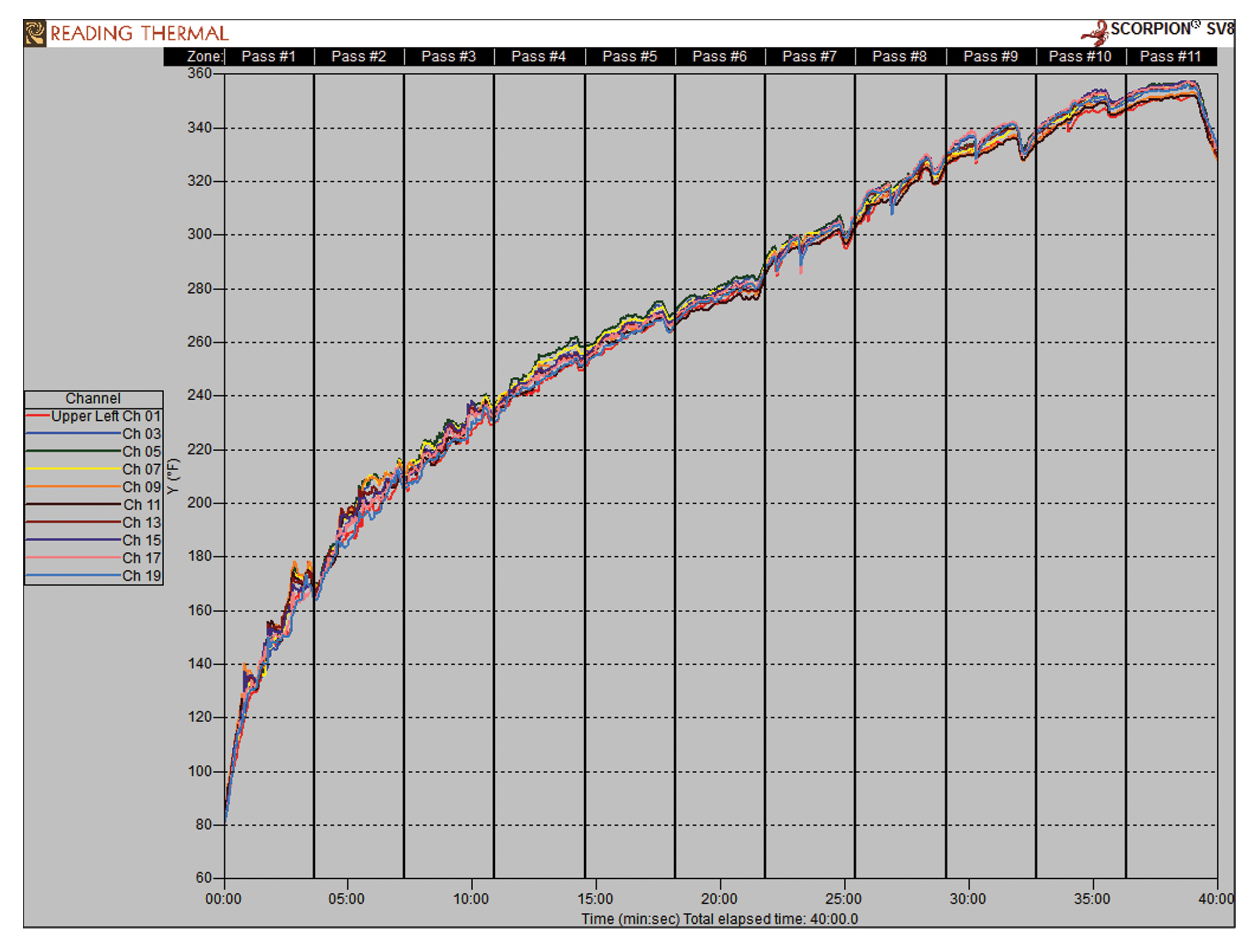
KEY: Graph Lines: Temperature sensor readings, each color band is a different sensor (channel) along the array.
Temperature Smart Sensor Array - Upper Air - 2D Contour Chart
PRODUCT.........................................................................................................................................White Sheet Cake
PROCESS TIME.........................................................................................................................................................40:00
OVEN ZONES...............................................................................................................................11 Zones, 30 ft each
OVEN LENGTH.........................................................................................................................................................330 ft
OVEN TYPE.........................................................................................Vertical Serpentine / Radiant Oil Heat
MEAN VARIATION............................................................................................................................99% within ±5°F
PROFILE DESCRIPTION
This is an EXCELLENT profile due to very minimal temperature deviation in the oven. The oven has superior temperature control. Repeated regular spikes and dips indicate heated oil inflow locations along a pass, and/or the conveyor openings into the multi-pass system. No variation past ±15°F observed.
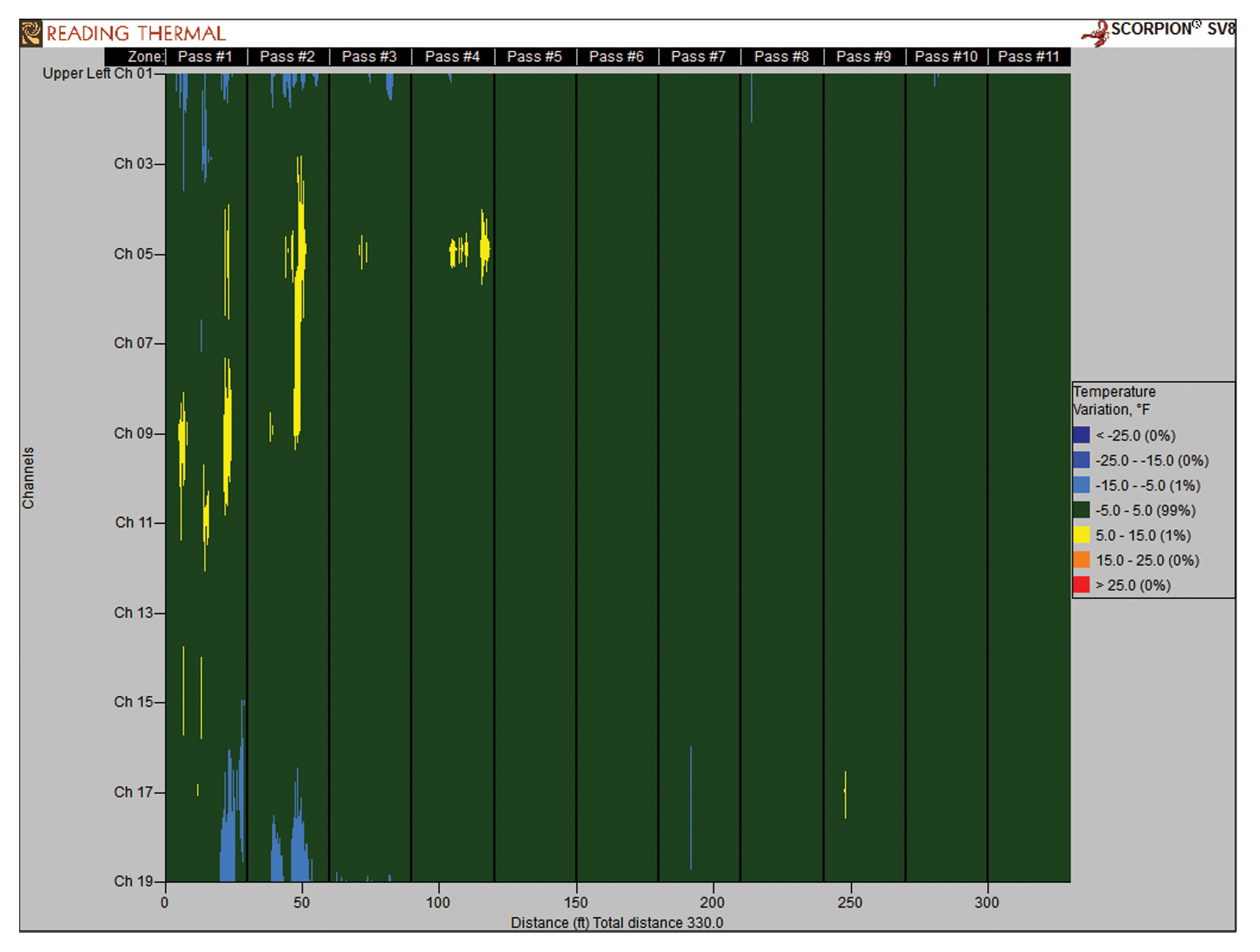
KEY: Contour color zones represent regions of average temperature variations, with green being the center average. Yellow zones are hotter and blue zones are colder. This plot is variation, not the absolute temperatures.
Air Velocity Smart Sensor Array - 2D Line Chart
PRODUCT................................................................................................................................................Toaster Pastry
PROCESS TIME.................................................................................................................................................................................7:05
OVEN ZONES................................................................................................................................6 Zones, 50 ft each
OVEN LENGTH.........................................................................................................................................................300 ft
OVEN TYPE............................................................................................................................Forced Air Convection
MEAN VARIATION......................................................................................................................92% within ±50fpm
PROFILE DESCRIPTION
This is an EXCELLENT airflow profile of a convection oven. The first two zones are in indirect mode, which does not force airflow down to the product. The third zone is slightly more direct, and the last three zones are in direct airflow mode, due to the higher airflows for coloring the product.
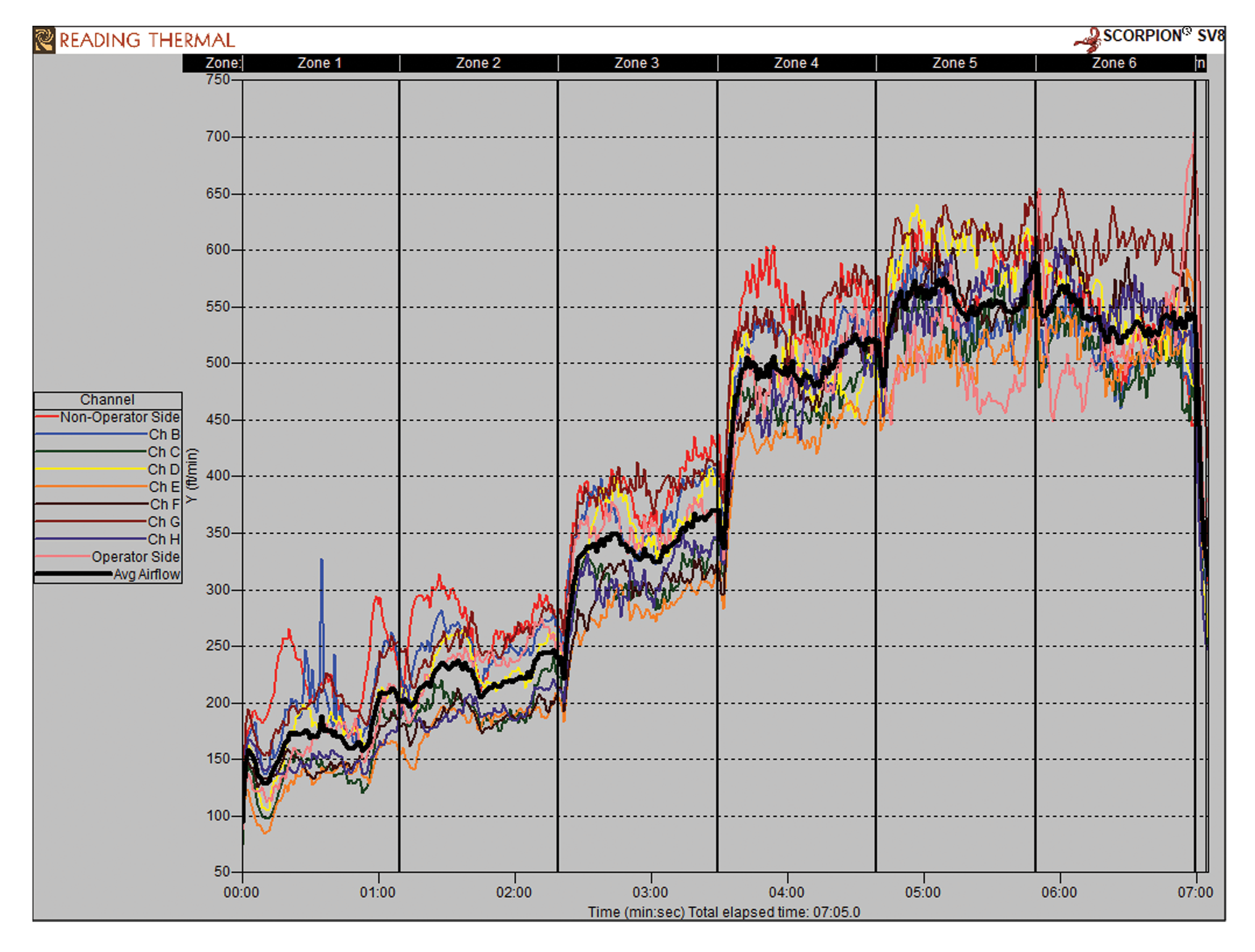
KEY: Graph Lines: Air Velocity sensor readings, each color band is a different sensor (channel) along the array.
Air Velocity Smart Sensor Array - 2D Line Chart
PRODUCT.................................................................................................................................................Toaster Pastry
PROCESS TIME............................................................................................................................................................................... 7:05
OVEN ZONES................................................................................................................................6 Zones, 50 ft each
OVEN LENGTH........................................................................................................................................................300 ft
OVEN TYPE............................................................................................................................Forced Air Convection
MEAN VARIATION..................................................................................................................... 92% within ±50fpm
PROFILE DESCRIPTION
This is an EXCELLENT profile of a convection oven. We can see no variation in the first two zones in indirect mode, since there is no airflow. Once the airflow is directed at the product from the third zone to the end, we can start to see some variation, but it is well within the tolerance of ±50fpm. The yellow and orange areas toward the non-operator sides are from higher airflow leaking through the plenum while the oven is in indirect mode, since that is the side the airflow is distributed from.
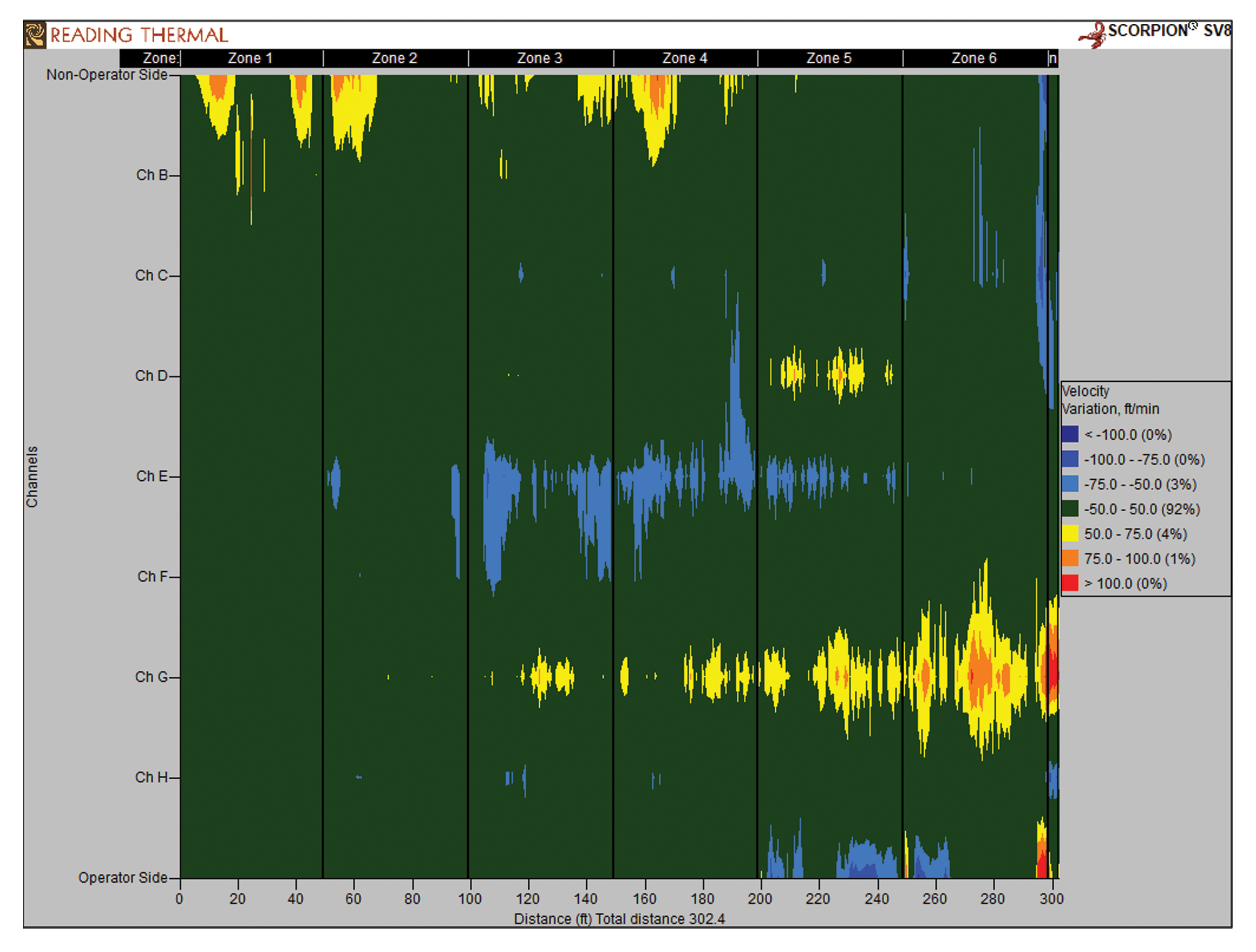
KEY: Contour color zones represent regios of average air velocity variations, with green being the center average. Red zones are faster and blue zones are slower. This plot is variation, not the absolute airflow.
Air Velocity Smart Sensor Array - 2D Line Chart
PRODUCT............................................................................................................................Shredded Wheat Cereal
PROCESS TIME........................................................................................................................................................... 4:51
OVEN ZONES......................................................................8 Zones, 28.8 ft each [Zone #8 is a dead zone]
OVEN LENGTH.........................................................................................................................................................230 ft
OVEN TYPE............................................................................................................................................. Impingement
MEAN VARIATION....................................................................................................................93% within ±200fpm
PROFILE DESCRIPTION
This is an EXCELLENT profile of airflow in an impingement style oven. The sharp contrast between lines is a characteristic of an impingement oven, since the higher airflow (greater than 1000fpm) is distributed to the product through very narrow tubes and the sensors could be directly underneath one of the distribution tubes or slightly off from the center of these tubes, which is why the variation is set to ±200fpm.
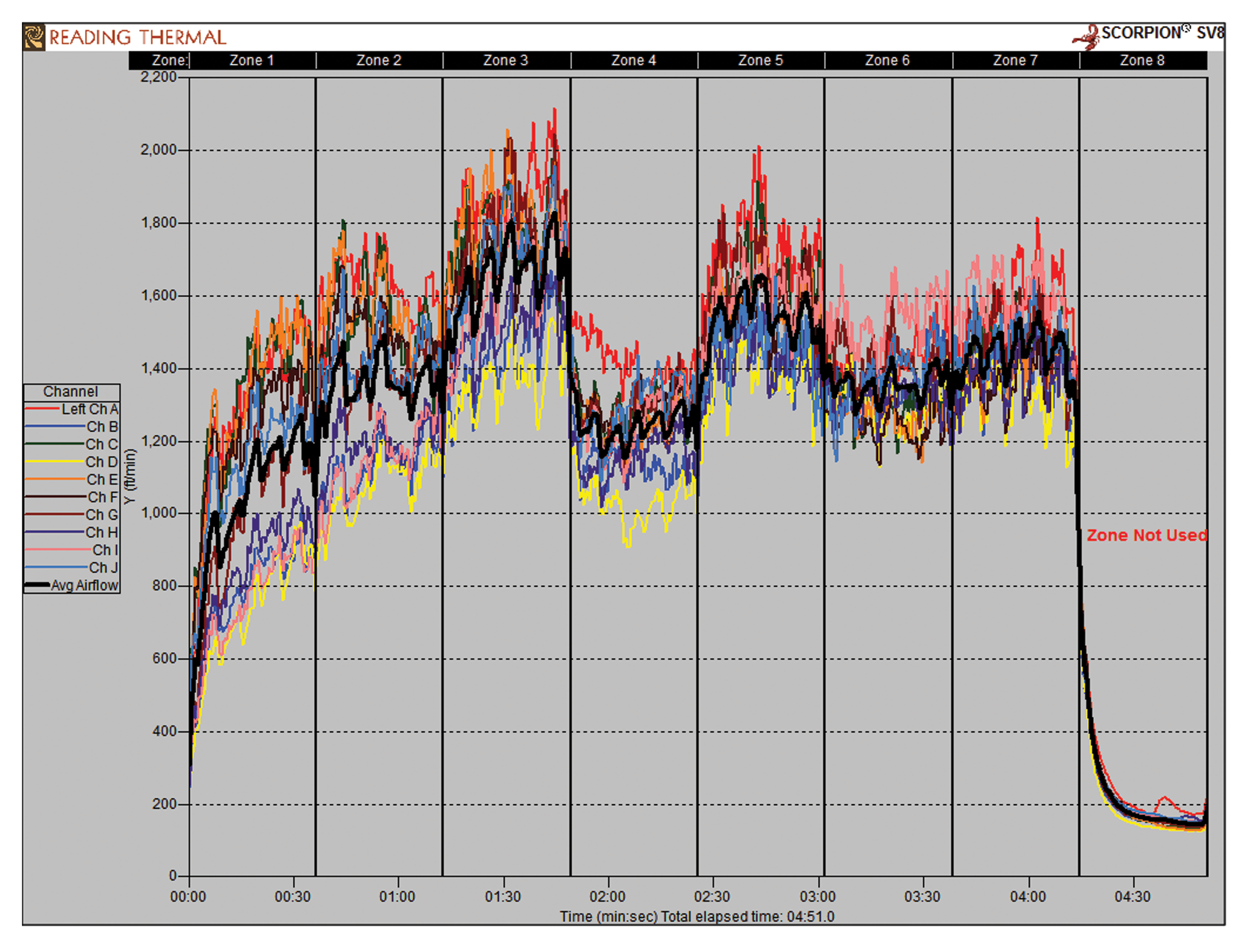
KEY: Graph Lines: Air Velocity sensor readings, each color band is a different sensor (channel) along the array.
Air Velocity Smart Sensor Array - 2D Contour Chart
PRODUCT...........................................................................................................................Shredded Wheat Cereal
PROCESS TIME........................................................................................................................................................... 4:51
OVEN ZONES......................................................................8 Zones, 28.8 ft each [Zone #8 is a dead zone]
OVEN LENGTH........................................................................................................................................................ 230 ft
OVEN TYPE...............................................................................................................................................Impingement
MEAN VARIATION....................................................................................................................93% within ±200fpm
PROFILE DESCRIPTION
This is an EXCELLENT profile of airflow in an impingement style oven. The alternating variation between sensors is normal, since the higher airflow (greater than 1000fpm) is distributed to the product through very narrow tubes and the sensors could be directly underneath one of the distribution tubes or slightly off from the center of these tubes.
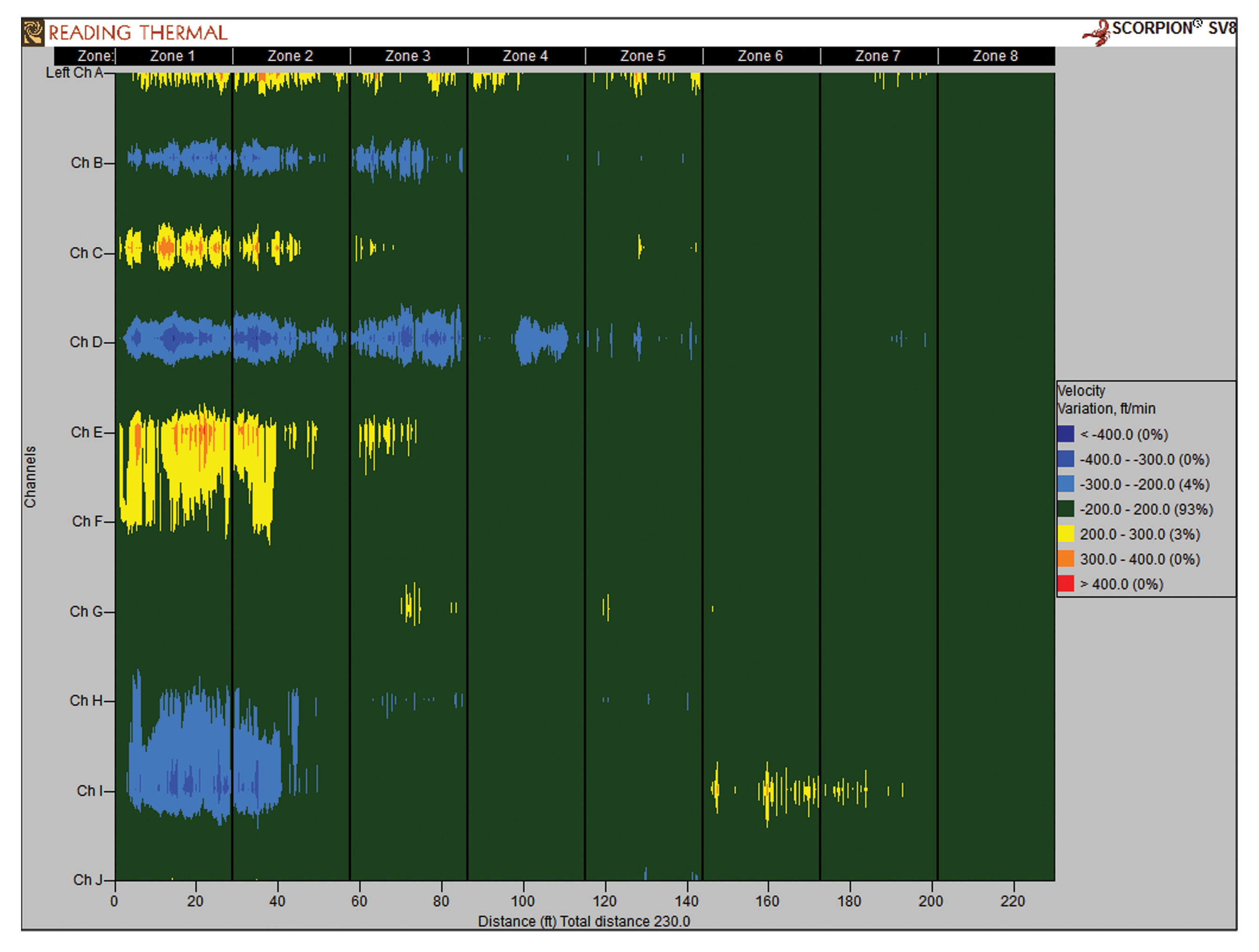
KEY: Contour color zones represent regions of average air velocity variations, with green being the center average. Red zones are faster and blue zones are slower. This plot is variation, not the absolute airflow.
ADDITIONAL SCORPION® SERVICES
- Profiling services using the SCORPION® 2 can be used to perform a comprehensive thermal and physical study of a single oven or used to compare two or more systems to one another.
- The Oven Safety Inspection Program performed by Reading Thermal is OSHA compliant and can provide a complete benchmark profile of the system for future reference and comparison.
Contact Reading Thermal today to find out how their system of environmental analysis can be applied to your specific baking situation.
Nicholas A. Bossler
Technical Service Manager
Reading Thermal
610-678-5890
info@readingthermal.com